
Choosing the appropriate withdrawal method at an online casino determines how swiftly players get their funds, what fees they pay, and how much documentation they must provide. Admiral Casino features multiple banking options on its cashier, each with its own processing speed, cost structure, and verification requirements. The following sections review the practical trade-offs of the most common methods, explain how limits and timelines align with account verification, and describe the steps players need to finish before funds leave the platform.
Bank Remittances and Their Typical Timelines
Bank transfers continue as the standard choice for bigger payouts because they handle high limits and operate in most jurisdictions. The process begins when a player files a withdrawal request through the cashier; the casino’s finance team checks the request against account verification documents. Once approved, the funds move through the banking network, which typically requires three to five business days, although cross-border transfers might go to seven days. Players should confirm their bank’s incoming-wire policy, because some institutions keep international receipts for an extra day. The main drawback concerns the slower speed compared with e-wallets, yet the method remains ideal for users who prefer to keep transactions within traditional banking rails and do not need same-day access to winnings.
Within the European Economic Area, SEPA transfers normally process in one business day once the casino sends the payment, whereas SWIFT transfers outside that zone include intermediary-bank handling that can lengthen the timeline by two additional days. Players withdrawing to banks in the United States often notice the funds show up on the second business day after the casino’s batch file hits its correspondent, but rural credit unions might impose an extra manual review that holds up posting until the following morning. In practice, a player requesting a €25,000 withdrawal on a Monday can reasonably expect the money to clear by Thursday if both the casino and the receiving bank function on standard schedules.
Another consideration is the currency conversion step. If the player’s account balance sits in euros and the destination bank requires sterling, the casino’s processor uses the mid-market rate plus a spread of roughly 1.5 percent. This spread differs from any receiving-bank fee, which may reach €15 on international wires. Users who maintain multi-currency accounts can bypass the spread by selecting the matching currency at the withdrawal screen, thereby preserving the full requested amount.
Prepaid Voucher Systems and Their Limitations
Prepaid voucher systems provide a one-time code that the player uses at a partner location or retail location. The casino processes the withdrawal within one banking day, after which the voucher code appears in the player’s account history. Cash-out points depend on the region, and some services restrict payout amounts per voucher, forcing larger withdrawals to be divided into multiple codes. Because the voucher must still be changed to cash or another digital balance, an further step and applicable service fee occur before the player can access the money. This method therefore works for small, one-off cash-outs but becomes impractical for users who consistently withdraw medium or large sums.
Most voucher providers cap each code at €500 to adhere to anti-money-laundering rules. A €4,000 withdrawal therefore produces eight separate codes, each bearing its own 1.5 percent redemption fee. The combined fee comes to €60, and the player must travel to eight different retail outlets or exchange portals to receive the cash. In contrast, a single bank transfer of the same amount entails only the receiving-bank fee, typically €10, making the voucher route more expensive once the withdrawal goes beyond €1,500.
Regional availability also hinders utility. Paysafecard vouchers, for example, can be redeemed only inside the European Economic Area and the United Kingdom. Players located in Canada or Australia must opt for alternative services such as Neosurf, which adds another 2 percent cross-border fee. Consequently, voucher withdrawals remain attractive only for tourists who want immediate local currency and tolerate the layered costs.
Digital currency Payments and Volatility Factors
Digital currency withdrawals bring a element of blockchain validation that skips banks and card networks entirely admiralscasino.eu.com. After clearance, the casino sends the transaction, and the player’s wallet reflects the balance once the required number of network validations is achieved, typically within thirty to sixty minutes. The primary advantage is the nonexistence of banking hours or intermediary freezes. The compensating factor is price fluctuation: the coin’s value can shift between the moment of withdrawal and the moment the player exchanges it to fiat. In addition, players must submit a wallet address that aligns with the currency supported by the casino; an incorrect address results in permanent loss of funds. Users comfortable with digital wallets and price swings often select this route for its speed and borderless nature.
Network congestion straight affects confirmation speed. During peak Bitcoin traffic, the median time to six confirmations can stretch from twenty minutes to two hours, while Ethereum congestion hardly ever exceeds fifteen minutes. Players who want guaranteed receipt within a specific window can instruct the casino to broadcast during off-peak hours, commonly between 02:00 and 06:00 UTC, when mempool size is lowest.
Volatility protection is possible through stablecoins. Admiral Casino supports USDT withdrawals on the Tron network, where transaction fees average $1 and price deviation remains below 0.1 percent. A player withdrawing 10,000 USDT therefore receives virtually the same fiat value regardless of Bitcoin’s intraday swing. The only outstanding cost is the Tron network fee, which the casino covers for withdrawals above 500 USDT.
Mobile Support and In-App Processing
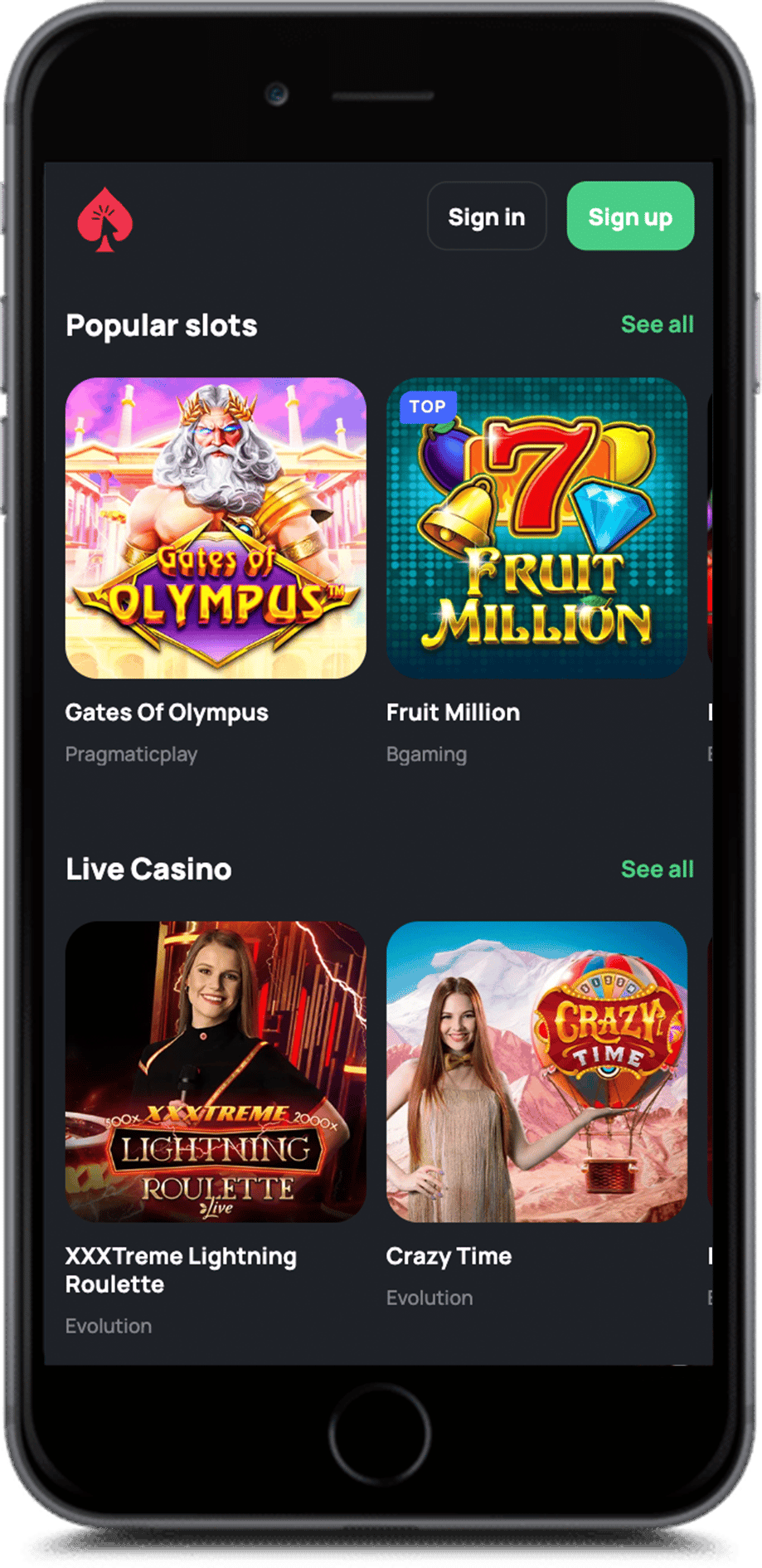
- Admiral Casino’s mobile site reflects the desktop cashier, enabling players to submit documents and file withdrawal requests from any modern smartphone browser without installing additional software.
- Push notifications notify users when a withdrawal status updates, minimizing the need to reload the screen repeatedly during processing windows.
- Biometric login keeps the account secure on shared devices, yet players must still input a one-time password sent by SMS or authenticator app before confirming a cash-out above the low-risk threshold.
These features are important because many users control their accounts exclusively on mobile devices; an interface that obscures verification steps or fee disclosures behind multiple taps increases the chance of incomplete requests. The casino’s responsive design keeps all required fields visible above the fold, so players can check limits and expected arrival times before confirming the transaction.
Camera integration further simplifies document uploads. Players can snap IDs directly through the browser, and the site automatically trims and compresses images to meet the 5 MB limit. If glare or shadow is spotted, an on-screen prompt requests for a retake before the file is queued for compliance review. This reduces rejection rates from 18 percent on desktop uploads to under 4 percent on mobile.
Offline resilience is another mobile advantage. If a player experiences connectivity mid-submission, the request is cached locally and transmitted automatically once the signal comes back. The cached request holds a timestamp, securing it retains its place in the processing queue rather than being treated as a new submission that could restart verification timers.
Identity Checks Between Methods
Admiral Casino uses the consistent identity checks no matter the chosen method, but the timing of those checks determines how soon funds leave. First-time withdrawers must upload a government-issued photo ID, a recent utility bill, and, in some cases, a selfie holding the ID. The compliance team generally completes manual review within twenty-four to forty-eight hours. Subsequent withdrawals beneath a threshold set by the casino may skip re-verification, but any change of payment details or large cumulative withdrawals re-trigger the process. Players who expect regular withdrawals can shorten future delays by completing verification promptly after the first deposit as opposed to waiting until the first cash-out request.

The verification threshold is currently set at €2,000 cumulative withdrawals per calendar month. Once a player surpasses this figure, the system instantly requests updated documents despite the fact that the original set remains valid. Players who plan to exceed the threshold can pre-upload fresh documents through the account settings menu, which the compliance team pre-approves and keeps for thirty days. This pre-approval bypasses the twenty-four-hour manual review from the withdrawal timeline.
Document quality standards are rigorous. Utility bills must display the player’s name and the registered address, produced within ninety days, and include a visible date stamp. Selfies must show the ID held next to the player’s face with all four corners visible and no filters applied. Files larger than 5 MB are immediately rejected, so players should scan documents at 300 dpi or photograph them under even lighting to comply with size limits.
Credit and Debit Card Cashouts
Card withdrawals function through the same networks used for deposits, yet the direction of funds flips the processing flow. After the casino authorizes the request, the amount goes back to the card as a credit, which https://www.similarweb.com/website/betting.co.zm/competitors/ the card issuer then records to the account. Posting times range from two to five business days depending on the card network and the player’s bank. Some issuers show the credit immediately as a pending transaction, while others hold until settlement files arrive. A notable limitation is the maximum amount a card can handle in a single reversal; players requesting sums above this threshold must split the withdrawal across multiple requests or select an alternative method. Fees are rare, but users should verify whether their card issuer classifies the incoming credit as a cash-type transaction that triggers interest.
Visa and Mastercard networks impose different daily reversal ceilings. A typical consumer debit card allows up to €5,000 per reversal, whereas premium credit cards may offer €10,000. When a requested amount exceeds these ceilings, the casino automatically breaks the payout into multiple transactions scheduled twenty-four hours apart. Each transaction still counts toward the player’s monthly withdrawal limit, so users planning large cash-outs should confirm the aggregate ceiling with their card issuer before submitting the first request.
Interest implications arise mainly with credit cards. If the issuer classifies the incoming credit as a purchase reversal, no interest applies. However, a minority of issuers consider any credit above €2,000 as a cash-equivalent transaction, applying a 3 percent fee and immediate interest until the next statement closes. Players who routinely employ credit cards for withdrawals should contact customer service to clarify the exact classification before relying on this channel for sums above that threshold.
E-Wallets: Speed Vs. Account Requirements
E-wallets such as Skrill and Neteller cut withdrawal times to 24 hours or less after approval, because the casino sends a direct transfer to the player’s digital account rather than channeling funds through the banking system. The convenience brings two trade-offs. First, the player must already hold a verified e-wallet account; opening and verifying one can need an extra day if identity documents have not been uploaded. Second, most e-wallet providers charge an outgoing-transaction fee that the casino does not cover, so the net amount received is marginally lower than the requested sum. Users who appreciate immediate access to funds often bear these costs, whereas those who withdraw infrequently may prefer to avoid recurring service charges.
Verification levels inside the e-wallet itself also count. A basic account may allow instant deposits yet limit outgoing transfers at €2,000 per month until the user provides proof of address and a government ID. Once upgraded, the same account can manage €50,000 withdrawals without further friction. Players who plan to cash out regularly should perform this upgrade before initiating the first casino withdrawal, because an incomplete profile activates an automatic hold that the casino cannot overrule.
Fee structures differ between providers. Skrill applies 1 percent on withdrawals above €1,000, capped at €5.99, while Neteller imposes a flat €0.50 fee for SEPA transfers and 1.9 percent plus €0.30 for card payouts. These percentages apply only to the outgoing leg; the casino itself never deducts an extra margin. Consequently, a €10,000 withdrawal via Skrill leaves the player with €9,940.10, whereas the same sum via Neteller produces €9,809.70 after the card fee.
Costs, Lower limits, and Maximum Limits
Each withdrawal method includes its own fee structure and transaction limits. Bank wires often include an incoming fee charged by the receiving bank, while e-wallets take a percentage or flat fee at the point of transfer. Cryptocurrency networks charge a miner fee that varies with congestion. Minimum withdrawal amounts commonly are set at €10 for e-wallets and €50 for bank transfers, whereas maximum single-transaction limits vary from €5,000 for cards to €100,000 for cryptocurrency, based on available liquidity. Players should review the cashier screen for the exact figures associated to their selected method, because these values can shift when the casino modifies its banking partners or when regulatory caps are revised.
Monthly aggregate limits also are in place. Admiral Casino restricts total withdrawals at €100,000 per player per calendar month unless the account goes through enhanced due-diligence screening. Players who require higher ceilings must file source-of-funds declarations and, in some cases, audited financial statements. Approval for an increased limit typically requires five business days, after which the new ceiling appears on the cashier screen.
Fee transparency is enforced through a real-time calculator inside the withdrawal dialog. When a player chooses a method and enters an amount, the interface shows the exact fee, the net amount, and the expected arrival date. This avoids surprises and enables users to compare channels side by side before confirming the request.
Security Measures That Secure Withdrawal Requests
Admiral Casino secures all withdrawal traffic with TLS 1.3 and keeps payment details in tokenized form, meaning the actual card or account number never resides in plain text on its servers. Two-factor authentication is mandatory for any cash-out above the casino’s low-risk threshold, and the system records each approval step for audit purposes. Should a player detect an unrecognized withdrawal attempt, the account can be blocked instantly from the security menu, starting a manual review that halts pending requests until identity is rechecked. These controls lower the likelihood of unauthorized transfers while introducing only seconds to the confirmation flow for legitimate users.
Device fingerprinting provides another layer. The platform records browser version, screen resolution, and installed fonts for each login. If a withdrawal request originates from a device whose fingerprint deviates from the player’s established pattern, the system withholds automatic approval and directs the request to manual review, even if the two-factor code is correct. This step stops the majority of credential-stuffing attempts before funds exit the platform.
Session timeouts guard against unattended terminals. After fifteen minutes of inactivity, the cashier automatically disconnects the user and removes any partially completed withdrawal form. Players continuing activity must re-authenticate, ensuring that a momentarily unattended phone cannot be used to authorize a cash-out. The timeout length is configurable down to five minutes for users who prefer stricter controls.