
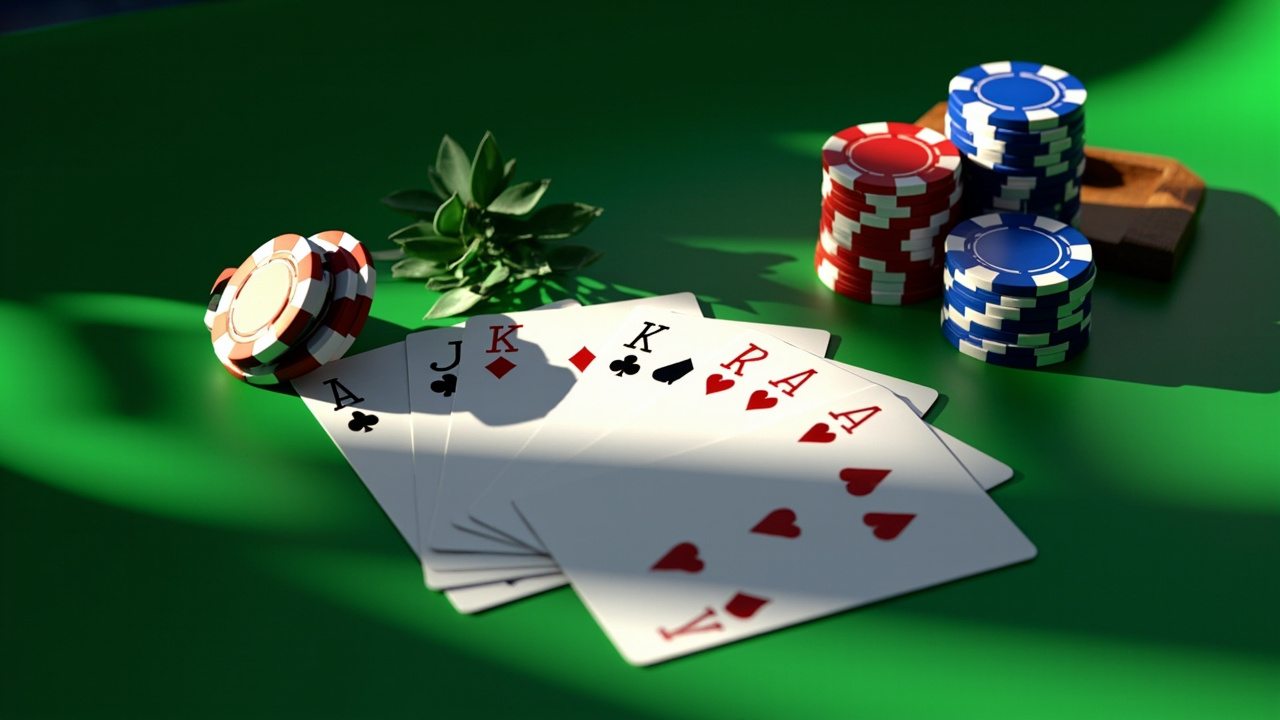
A good blackjack table rewards patience more than bravado, and the same discipline applies to the visuals that frame the game. From a Playtech art-direction lens, clarity in card presentation and bet controls reduces hesitation at the moment you decide whether to draw or hold. That same clarity matters when you are weighing blackjack when to hit or stand, especially on an Australian arvo when the pace slows and the choices matter more.
H2: How the Decision Reads on Screen
The first thing a player notices is not the odds but the layout: card pips, chip stacks, and button placement all compete for attention. I have seen Playtech-style compositions where high-contrast table textures and restrained animation keep the hand readable, and that is the standard I judge a blackjack presentation against. When the screen is cluttered, a player can misread a soft 17 as a hard total and make the wrong call under pressure. The Mirage introduced its erupting volcano to the Strip in 1989, and that same instinct for a memorable visual cue applies here: a clean table tells you what matters, while a noisy one distracts from the math. For an everyday Australian reader, the lesson is familiar – like checking a route on a phone before a drive out to Cairns, you want the information that changes your decision, not decoration that slows it down. Sophie Fisher, Head of Product, Wattle Gaming Partners, puts it plainly: “A player should not have to hunt for the rule that changes a hand; the presentation should make the choice obvious before the cards even land.” That is the bar for any blackjack when to hit or stand decision that is meant to feel considered rather than rushed.
H2: Reading the Hand Before You Act
H3: Hard totals and the dealer’s upcard
A hard total leaves no room for an ace to flip from one to eleven, so the call is usually about risk control rather than opportunity. The common playbook is to hit a hard 11 or lower, stand on 17 or higher, and treat the 12-to-16 range as the real test, where the dealer’s upcard does most of the work. If the dealer shows a weak card like a 4, 5, or 6, standing on a marginal total is often the better discipline because the dealer is more likely to bust. If the dealer shows a 7 or higher, the pressure shifts and hitting a low hard total becomes the more defensive move. Grace Parker, Product Analytics Lead, Boomerang Gaming Insights, notes that “the hands where players lose the most are not the dramatic ones; they are the hesitant stands on 12 against a 6 and the reckless hits on 16 against a 7.” That is the kind of pattern a clear table should make easier to see, not harder.
H3: Soft hands and the pairs that change the plan
Soft hands behave differently because the ace gives you a cushion, and that cushion changes when you should press or hold. A soft 18 or higher is usually a stand in many common situations, while a soft 17 or lower often invites a hit depending on the dealer’s card. Pairs add another layer: splitting can be sensible with twos, threes, sevens, and eights in the right matchups, while splitting tens is usually a mistake because you are breaking a strong starting position. The visual side matters here too – when split buttons and double-down controls sit where a player expects them, the decision feels deliberate instead of improvised. For a casual player, this is a bit like sorting luggage before a trip to Cairns; you pack what you will actually use and leave the rest, because a tidy setup saves you from a bad call later.
H2: Matching the Decision to Player Needs
The decision only works if the table around it supports it, and that is where bonus structure, eligibility, and contribution rules start to matter to a real player. A welcome offer might look generous until you read how much of your blackjack activity counts toward wagering, what the bet limits are during a promotion, and whether recurring promos reset the clock in a way that suits your rhythm. Licensing and regulation differ by market, and Australian players should treat any offshore casino as unregulated here rather than assuming local protections apply. Annika Murphy, iGaming Regulatory Consultant, Great Southern Betting Review, cautions that “players often focus on the headline bonus and miss the contribution rate, which is the number that decides whether a promotion is actually usable on this game.” A practical example for an ordinary Australian reader: if a bonus requires 30x wagering and blackjack contributes only a small share, the time and money you put in may not move you toward a realistic exit the way the offer sounds on the page. RocketPlayBonus frames its own welcome structure around clear eligibility and contribution terms, and you can read the specifics at https://rocketplaybonus.org/ before you commit to any play. The point is not to chase a promo; it is to make sure the offer, the table, and your own hit-or-stand discipline line up.
• Check how much blackjack contributes to wagering before you accept a bonus.
• Read the bet limits that apply during a promotion, not just the headline amount.
• Confirm eligibility and any recurring promo reset rules so you know the real timeline.
• Treat any offshore site as unregulated in Australia and keep expectations grounded.

The best blackjack decisions are the boring ones made on a clear table with a clear head. When the presentation is tidy, the dealer’s card is readable, and the bonus terms are honest, the choice to hit or stand stops being a guess and starts being a habit you can trust.